
Golf carts are more than just fun machines for the course; they’re a practical way to get around neighborhoods, resorts, and communities across Georgia. But like any vehicle, they require regular care to keep running smoothly. Ignoring small issues can turn minor repairs into expensive headaches, and understanding common problems can save both time and money.
Whether you’re searching for golf cart repair nearby or looking for tips on preventive care, knowing what to watch for and how to handle it can keep your golf cart in top shape. In this article, we’ll explore the most frequent repairs, how to prevent them, and when it’s best to call in professional help.
Understanding Your Golf Cart
Before diving into specific repairs, it’s important to know the basics of how golf carts work. Most carts fall into two categories: electric and gas-powered. Electric golf carts are popular for their quiet operation and low maintenance, but they rely heavily on battery health. Gas-powered carts can go longer between charges but require more attention to engine care.
No matter the type, golf carts share components like brakes, steering, tires, and electrical systems. Regular inspections and maintenance help spot issues before they become serious, and understanding common repair areas can make you a more proactive owner.
Common Golf Cart Repairs
1. Battery Issues and Electric Failures
Electric golf carts depend on a strong, reliable battery. Over time, batteries can lose charge, corrode, or fail. Signs of battery problems include slow acceleration, dim lights, or the cart failing to start.
Common causes:
- Overcharging or undercharging
- Loose or corroded connections
- Old or worn-out batteries
Preventive care:
- Follow recommended charging schedules
- Clean terminals and connections regularly
- Consider investing in a high-quality replacement battery when performance drops
If you need an electric golf cart battery replacement, professional services can ensure the right fit and safe installation.
2. Tire Wear and Alignment Problems
Golf cart tires are smaller and lighter than car tires, but they still need attention. Uneven wear or low tire pressure can affect handling, cause vibration, and increase the risk of damage to the suspension system.
Preventive tips:
- Check tire pressure monthly
- Rotate tires regularly
- Inspect for cracks, punctures, or worn tread
For local support, a golf cart service in Dawsonville can handle replacements and alignment adjustments efficiently.
3. Brake Repairs
A functioning brake system is critical for safety, whether you’re navigating a busy course or a residential area. Brakes may wear out, lose fluid, or become misaligned over time.
Signs of brake issues:
- Soft or spongy pedal feel
- Grinding noises during braking
- Cart rolling backward on slopes
Preventive maintenance:
- Inspect brake pads and cables regularly
- Replace worn components immediately
- Check hydraulic or mechanical systems for leaks
If unsure, it’s worth consulting experts who specialize in low-speed vehicle repairs in Braselton to ensure proper brake functionality.
4. Steering and Suspension Problems
Steering issues can range from loose tie rods to worn-out bushings, leading to poor handling or unusual noises. Similarly, the suspension system absorbs bumps and impacts, so neglecting it can damage other components.
Preventive strategies:
- Perform routine visual inspections
- Tighten bolts and connections as needed
- Replace worn bushings or shocks promptly
Maintaining smooth steering and suspension improves both safety and ride comfort.
5. Electrical Component Failures
Besides batteries, golf carts have several electrical parts like controllers, solenoids, and lights. Faulty wiring or loose connections can cause intermittent failures.
Prevention tips:
- Keep electrical components dry and clean
- Inspect wiring harnesses for frays or corrosion
- Address flickering lights or irregular behavior quickly
Regular attention to these components helps keep your electric golf carts running smoothly, reducing unexpected downtime and costly repairs.
6. Motor and Engine Repairs
Gas-powered carts require typical engine care: oil changes, filter replacements, and spark plug checks. Electric motors are simpler but still need inspection for overheating or unusual noises.
Maintenance pointers:
- Follow manufacturer service schedules
- Avoid overloading the cart
- Keep vents and cooling systems free of debris
A professional inspection can identify small motor issues before they lead to bigger problems.
7. Body and Frame Repairs
Golf carts are exposed to bumps, dings, and environmental wear. Body panels, seats, and frames may need repair or replacement over time. While cosmetic issues are less critical, structural damage can affect safety and handling.
Preventive care:
- Wash the cart regularly to prevent rust
- Check the frame for cracks or corrosion
- Address dents or broken panels promptly
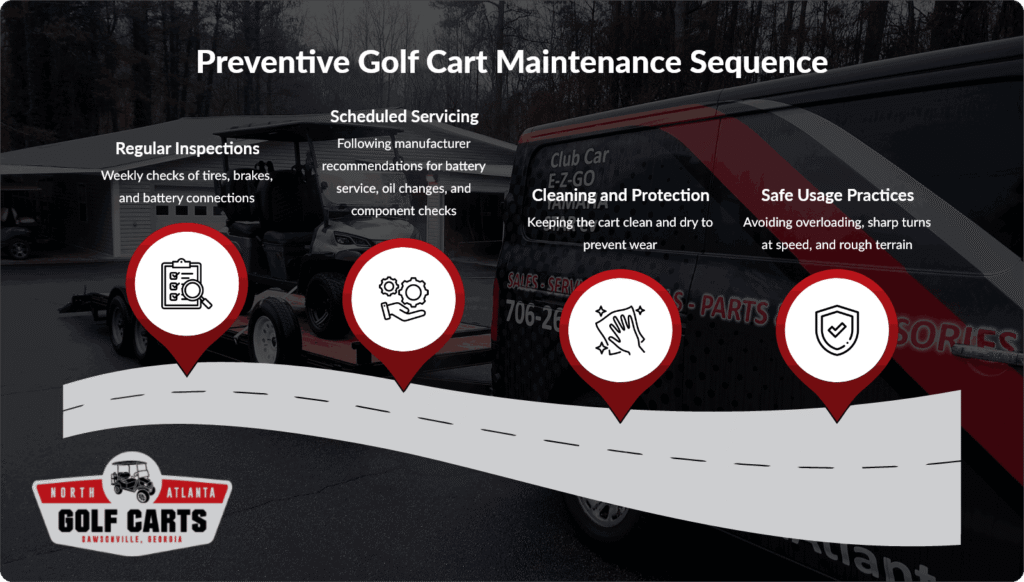
Preventive Golf Cart Maintenance
A proactive approach can drastically reduce repair costs and extend the life of your golf cart. Here’s how to stay ahead:
- Regular Inspections: Take a few minutes weekly to check tires, brakes, and battery connections.
- Scheduled Servicing: Follow manufacturer recommendations for battery service, oil changes, and component checks.
- Cleaning and Protection: Dirt, moisture, and debris can accelerate wear. Keep your cart clean and dry.
- Safe Usage Practices: Avoid overloading, sharp turns at speed, and rough terrain when possible.
Regular golf cart maintenance not only saves money but also enhances safety and reliability. In Georgia, practicing preventive maintenance can help avoid common issues caused by humid conditions or uneven terrain.
When to Call a Professional
Even with diligent maintenance, some repairs require expert attention. Professionals have the tools and experience to handle:
- Battery replacements
- Complex electrical diagnostics
- Brake and suspension overhauls
- Motor or engine repairs
Trained technicians can quickly diagnose and repair issues, keeping your golf cart in top condition. For residents near Dawsonville or Braselton, local service centers offer reliable and timely support.
Local Golf Cart Service Benefits
Choosing a local provider means faster service, better knowledge of local conditions, and easier access for follow-up care. Whether it’s a routine inspection or a major repair, working with a nearby service center saves time and ensures peace of mind.
Being near your provider helps maintain continuity in care and ensures parts and replacements are readily available.
Conclusion
Golf carts are convenient, enjoyable, and practical, but like any vehicle, they need attention. From batteries to brakes, tires to steering, understanding common issues and practicing preventive care can save headaches and money. Regular inspections, timely repairs, and professional support are key to keeping your cart safe and reliable.
If you’re looking for expert assistance, North Atlanta Golf Carts offers comprehensive service options for electric and gas-powered carts, helping you enjoy smooth rides year-round.