
Golf carts are no longer limited to golf courses. You see them in neighborhoods, large properties, campgrounds, resorts, and even small towns where short trips are part of daily life. They’re practical, easy to drive, and surprisingly versatile.
If you’re planning to buy a golf cart, a big question comes up right away: Should you choose an electric golf cart or a gas-powered one?
Both options have loyal fans. Some people swear by the quiet ride of electric carts, while others prefer the longer range and power of gas models. The truth is that each type works better in certain situations. The right choice depends on how you plan to use the cart, where you’ll drive it, and how much maintenance you’re comfortable with.
Let’s walk through the real differences so you can decide which type fits your needs.
Why Golf Carts Have Become So Popular
Before comparing power systems, it helps to understand why golf carts are everywhere these days.
Many communities allow them for short trips. They’re convenient for quick rides to a neighbor’s house, the clubhouse, or local shops. Large properties also benefit from them, as they make moving around easier without requiring a full vehicle.
Golf carts are also common in:
- Gated communities
- Resorts and vacation properties
- Campgrounds and RV parks
- Farms and large residential lots
- College campuses
- Industrial facilities
Because they’re compact and easy to handle, they’re perfect for places where a full car feels unnecessary.
The power system you choose will shape how the cart performs in these situations.
Understanding Electric Golf Carts
Electric golf carts run on rechargeable batteries. Instead of gasoline, they store energy in battery packs that power an electric motor.
When you press the accelerator, the motor draws energy from the batteries and moves the cart forward. The process is quiet and smooth.
Most electric carts use several deep-cycle batteries connected together to supply enough power.
How Electric Carts Work
Operating an electric cart is simple.
You plug the cart into a charging outlet when the battery level gets low. Charging usually happens overnight. After that, the cart is ready for another day of driving.
For many owners, this routine becomes second nature.
Benefits of Electric Golf Carts
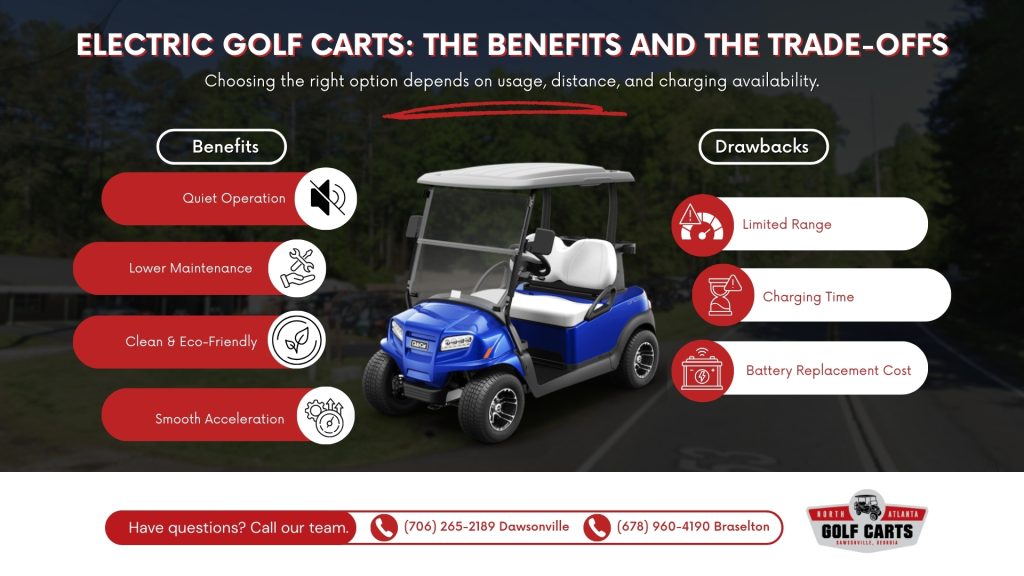
Electric models have gained popularity for several reasons.
1. Quiet operation
One of the first things people notice is how quiet electric carts are. There’s no engine noise, which makes them ideal for peaceful neighborhoods or golf courses where noise matters.
2. Lower routine maintenance
Electric carts have fewer moving parts than gas engines. There’s no oil to change, no spark plugs, and no fuel system to maintain.
That means fewer service visits for many owners.
3. Clean operation
Electric carts produce no exhaust fumes while driving. For indoor facilities or closed communities, that can be a major advantage.
4. Smooth acceleration
Electric motors deliver power instantly. The result is a smooth, steady ride without engine vibration.
Drawbacks of Electric Golf Carts
Electric carts are great for many uses, though they do have a few limits.
1. Limited range
A fully charged battery usually provides enough power for a full day of normal use. Long-distance driving may require recharging sooner.
2. Charging time
Charging takes several hours. If the batteries run empty during the day, you cannot refill them as quickly as a gas tank.
3. Battery replacement cost
Batteries eventually wear out. Many owners replace them every few years, depending on usage and care.
Understanding Gas Golf Carts
Gas golf carts run on small gasoline engines, similar to lawn equipment engines. These engines power the wheels through a mechanical drive system.
When you press the accelerator, fuel is burned in the engine and converted into motion.
How Gas Carts Operate
Gas carts are familiar to anyone who has driven small motor equipment.
You fill the fuel tank at a gas station or from a container at home. Once started, the engine runs continuously while the cart is in use.
Refueling takes only a few minutes.
Benefits of Gas Golf Carts
Gas-powered carts remain popular for a few practical reasons.
1. Longer driving range
Gas carts can travel longer distances before refueling. For large properties or heavy daily use, this makes a difference.
2. More power for hills
Gas engines often provide stronger pulling power. If your property has steep slopes or rough terrain, a gas cart may feel more capable.
3. Quick refueling
Running out of fuel is easy to fix. Add gasoline, and you’re back on the road in minutes.
4. Good for extended daily use
If a cart runs for many hours every day, gas power may be easier to manage than repeated battery charging.
Drawbacks of Gas Golf Carts
Gas models also come with a few tradeoffs.
1. Engine noise
Gas engines produce noticeable sound. It’s not loud like a car engine, though it is clearly audible.
2. Regular engine service
Oil changes, air filters, spark plugs, and fuel system maintenance are part of ownership.
3. Exhaust emissions
Gas carts release engine exhaust, which may not be ideal for certain areas.
Comparing Electric and Gas Golf Carts Side by Side
When buyers compare carts, they usually focus on several key factors.
1. Noise Level
Electric carts win this category easily. They are very quiet, which makes them perfect for residential areas and golf courses.
Gas carts produce a steady engine sound during operation.
For communities where quiet travel matters, electric is often preferred.
2. Range and Driving Distance
Gas carts typically travel farther without stopping.
Electric carts perform well for routine trips around a community or property. Long daily travel may require careful battery management.
People who plan to drive long distances often lean toward gas models.
3. Maintenance Requirements
Electric carts require less routine service.
Maintenance usually includes:
- Checking battery water levels
- Keeping battery connections clean
- Charging regularly
Gas carts need more mechanical care, including engine maintenance.
Neither system is difficult to maintain, though electric carts tend to be simpler overall.
4. Upfront Cost
Prices vary by manufacturer, model, and accessories.
In many cases, electric carts and gas carts have similar purchase prices. High-end models can vary widely depending on features.
5. Long-Term Costs
Electric carts require battery replacement every few years.
Gas carts need fuel and regular engine service.
Which option costs more over time depends on how often the cart is used.
6. Power and Performance
Gas carts generally provide stronger torque for heavy loads or steep hills.
Electric carts still perform well in most everyday conditions. Many modern electric models deliver impressive acceleration.
For typical neighborhood driving, both types feel comfortable and capable.
Which Type of Golf Cart Works Better for Neighborhood Use?
Many golf carts are used in residential communities.
For that environment, electric carts often make sense.
Why?
Quiet operation is a big advantage. Early morning rides or evening trips stay peaceful. Charging at home is easy as long as a standard outlet is available.
Electric carts also avoid fuel storage in garages.
Gas carts still work well in neighborhoods, especially if the driver plans longer trips or frequent use throughout the day.
Which Option Is Better for Large Properties?
Large rural properties often present different needs.
Owners may drive long distances across fields, trails, or farm roads. A cart may run for hours at a time.
Gas carts tend to perform well in these conditions. The longer range and quick refueling can be helpful.
Electric carts can still work on large properties, though drivers may need to keep an eye on battery levels.
What About Golf Courses?
Many golf courses prefer electric carts.
The quiet ride improves the playing experience. Electric motors also avoid engine exhaust on the course.
Charging stations at the clubhouse allow carts to recharge between rounds.
Environmental Considerations
Electric carts produce no emissions while driving. This makes them appealing for communities trying to reduce fuel use.
Gas carts rely on gasoline engines, which release exhaust gases.
That difference matters more in enclosed or heavily populated areas.
What Do Owners Usually Say?
Golf cart owners often develop strong preferences.
Electric cart owners often appreciate the quiet ride and low routine maintenance.
Gas cart owners enjoy the freedom to drive longer distances without worrying about battery charge.
In online discussions and owner forums, one pattern appears frequently.
People who use their carts for short daily trips often prefer electric models. Those who rely on carts for extended driving lean toward gas power.
How Charging and Refueling Compare
The daily routine of owning a cart matters more than many buyers expect.
Electric carts
Charging typically happens overnight. You plug the cart into a standard outlet and let the charger do its job.
For most owners, it becomes part of the evening routine.
Gas carts
Gas carts need occasional refueling. Filling the tank takes only a few minutes, similar to a small engine tool.
Both systems are simple once you get used to them.
Now What About Speed?
Most standard golf carts reach similar speeds regardless of power type.
Typical speeds fall between 12 and 15 miles per hour for basic models. Modified or street legal versions may go faster depending on local rules.
Speed differences between gas and electric carts are usually small.
What to Think About Before Buying Golf Carts?
When choosing between electric and gas, ask yourself a few simple questions.
How far will you drive each day?
Short daily trips work well with electric carts.
Do you have easy access to a charging outlet?
Electric carts need regular charging.
Will the cart climb steep hills or carry heavy loads?
Gas engines may feel stronger in those situations.
Do you prefer quieter vehicles?
Electric carts are much quieter.
Are you comfortable with engine maintenance?
Gas carts require more mechanical care.
Your answers will quickly point you toward the right choice.
How Can You Find the Best One for All Your Needs
Beyond the power system, several other details matter when buying a cart.
Think about:
- Seating capacity
- Storage options
- Lighting packages
- Weather enclosures
- Lift kits or off-road tires
These features shape how the cart fits into your lifestyle.
Local dealers can help buyers compare models, test drive carts, and select accessories that match how the vehicle will be used.
For buyers in Georgia looking at different models and configurations, North Atlanta Golf Carts is one of the dealerships people often visit to compare options in person.
Seeing carts side by side can make the decision much easier.
Final Thoughts
Choosing between an electric and a gas golf cart comes down to lifestyle and daily use.
Electric carts deliver quiet rides, simple maintenance, and clean operation. They work well for neighborhoods, golf courses, and short local travel.
Gas carts offer a longer range and strong pulling power, which can help on large properties or during extended use.
Neither option is universally better. Each one fits different driving habits.
If possible, test drive both types before deciding. A short ride often reveals what feels right.
When buyers compare features, ask questions, and consider how the cart will be used, the right choice becomes clear. Many shoppers start that process by visiting a dealership such as North Atlanta Golf Carts to see the available models and learn more about what works best for their situation.